BREAKING NEWS

Like this page? Share it with your friends!

Showing posts with label tips for parents. Show all posts

Saturday, May 6, 2017

The 5 Things You Must Know When Considering Co-Sleeping

In our culture, there are very few topics that are more controversial than sleeping in the same bed as your baby. This is most often referred to as “co-sleeping,” “bedsharing,” or “the family bed.”

Many moms choose to co-sleep out of convenience, especially if breastfeeding. On the other hand, it is risky and has been associated with SIDS.

I had read about co-sleeping before having my daughter and thought that it was best to avoid it.

When Maxine came home from the hospital, I had her sweet little bassinet ready by my side of the bed and was convinced she would easily sleep through the night right away. It was a nice theory, but it didn’t seem like she slept well in it.

When she did sleep, I couldn’t: I would wake up at least once an hour to check on her and make sure she was still breathing.

After a few weeks of this, I was exhausted (as I’m sure you are right now) and decided maybe it would work out better if Max slept beside me.

It was like night and day: she slept better, and I slept better knowing that she was right beside me and I could feel her breathing. There was also a bonus: my husband is a truck driver and is away from home quite a bit, so cuddling with our sweet baby helped with those lonely nights when he was away (I’m sure all you military wives can agree).

While opinions are conflicting, many agree that co-sleeping is safe if done responsibly. Whether or not you decide to co-sleep, you must take some steps to ensure your baby’s safety while he sleeps.

1. Co-sleeping is common.

While bedsharing is frowned upon by many here in America, many cultures currently co-sleep with their babies.

According to BabyCenter,

“It turns out that many families sleep together all over the world. While it’s hard to tell exactly how many parents in the United States co-sleep, there’s no doubt it’s a growing trend: According to one national survey, about 13 percent of parents practice sleep-sharing, a number that’s more than doubled in recent years. Even parents who don’t subscribe to the idea of a family bed may allow a child to co-sleep on occasion when they feel it’s necessary.”

In an article on SciJourner.org, Dr. Danny Lewin (director of the Sleep Disorders Medicine Program in the National Center on Sleep Disorders Research at the National Institutes of Health) states:

“Co-sleeping is a common practice in about 75% of the world….that closeness of proximity at night is probably one of the most powerful cues to help us…let down and let go. So a child who does not want to sleep alone at night is doing something very, very natural.”

Tracy Hogg writes (with co-author Melinda Blau) in Secrets of the Baby Whisperer (which I highly recommend, by the way):

“[Parents] who share the family bed philosophy often cite parenting practices in cultures such as Bali, where infants are not allowed to touch the ground until they’re three months old.”

Whether you are part of the group in favor of co-sleeping or decide that it’s not right for you, it is imperative to know the risks as well as the benefits so you can make an educated decision (no matter how common or uncommon it is).

2. There are benefits for mother and baby.

In 1992, Dr. William Sears, a well-known advocate of “sleep sharing”, did a study on the benefits for both mother and baby: he set up equipment to monitor his eight week old daughter’s breathing in two different sleep environments: sharing a bed with her mother (his wife, Martha) the first night, and sleeping alone.

Martha nursed Lauren to sleep the same way both nights. He and a technician observed and recorded the information, which was analyzed by a computer and interpreted by a pediatric pulmonologist (who was purposefully kept in the dark as to what data came from which sleeping situation).

Sears states, “Our study revealed that Lauren breathed better when sleeping next to Martha than when sleeping alone. Her breathing and her heart rate were more regular during shared sleep, and there were fewer “dips,” low points in respiration and blood oxygen from stop-breathing episodes. On the night Lauren slept with Martha, there were no dips in her blood oxygen. On the night Lauren slept alone, there were 132 dips.”

Sears also shares the preliminary findings of studies done (on mothers and babies ranging from two to five months) in sleep laboratories that were set up to mimic the home bedroom as much as possible:

  • “Sleep-sharing pairs showed more synchronous arousals than when sleeping separately. When one member of the pair stirred, coughed, or changed sleeping stages, the other member also changed, often without awakening.
  • Each member of the pair tended to often, but not always, be in the same stage of sleep for longer periods if they slept together.
  • Sleep-sharing babies spent less time in each cycle of deep sleep. Lest mothers worry they will get less deep sleep; preliminary studies showed that sleep-sharing mothers didn’t get less total deep sleep.
  • Sleep-sharing infants aroused more often and spent more time breastfeeding than solitary sleepers, yet the sleep-sharing mothers did not report awakening more frequently.
  • Sleep-sharing infants tended to sleep more often on their backs or sides and less often on their tummies, a factor that could itself lower the SIDS risk.
  • A lot of mutual touch and interaction occurs between the sleep-sharers. What one does affects the nighttime behavior of the other.”


Many mothers agree that co-sleeping makes breastfeeding at night easier, and sleep better while bonding with their babies. 

3. There are risks you should know about.

There are many who disagree that the benefits outweigh the risks when a mother decides to co-sleep.

The American Academy of Pediatrics (AAP) as well as the U.S. Consumer Product Safety Commission strongly recommend against sharing a bed with your baby due to the increased risk of SIDS, death from suffocation, strangulation, or another unexplained cause. The AAP says, “Room-sharing without bedsharing is recommended – there is evidence that this arrangement decreases the risk of SIDS by as much as 50%.” (Courtesy of Kellymom.com)

Many experts disagree, arguing that deaths that occur while co-sleeping are most often associated with one or more risk factors that result in suffocation or SIDS.

James J. McKenna, Ph.D., a world-recognized infant sleep authority, notes:

“In sum, overwhelmingly, bedsharing deaths are associated with at least one independent risk factor associated with an infant dying. These include an infant being placed prone (on its stomach) and placed in an adult bed without supervision, or no breastfeeding, or other children in the bed, or infants being placed in an adult bed on top of a pillow, or who bedshare even though their mothers smoked during the pregnancy therein compromising potentially the infants ability to arouse (to terminate too little oxygen, or to terminate an apnea).

Drug use and alcohol have historically been associated with poor outcomes for bedsharing babies so if drugs and/or alcohol are present, please don’t bedshare. You can see what else Dr. McKenna has to say about co-sleeping in this video.”

Dr. Sears agrees, “I believe that in most cases SIDS is a sleep disorder, primarily a disorder of arousal and breathing control during sleep. All the elements of natural mothering, especially breastfeeding and sharing sleep, benefit the infant’s breathing control and increase the mutual awareness between mother and infant so that their arousability is increased and the risk of SIDS decreased.”

A lot of mothers (including me) still choose to co-sleep despite the warnings of many. Knowing that there is a risk of SIDS or suffocation obviously made me anxious, but I think that as a parent, you have to choose what’s best for your baby at the time no matter what warnings you hear.

4. You need to be responsible.

If you decide to co-sleep with your baby, make sure the environment is as safe as possible:

  • Don’t sleep with your baby if you or your partner smokes.
  • Always lay baby on a firm, flat surface. So no soft mattresses, couches, pillows, egg-crate mattress toppers, or any other surface that can interfere with your baby’s breathing.
  • If you or your partner are extremely overweight, it is much safer to keep baby in a crib or bassinet next to your bed.
  • Don’t sleep with baby if you already share a bed with an older child or your pet.
  • Check each night for gaps between your mattress and the wall (if your bed is against a wall), and remove any headboard and footboard that have cutouts or slats more than 2 3/8 inches apart.
  • Make sure your bedroom is childproof, and keep your bed away from anything that could be unsafe for a baby (glass tables or furniture with sharp edges, lamps that can be pulled over, window blind cords, etc.)
  • Sleep with only a light blanket (I always preferred to sleep with the afghan-type blankets that have holes you can breathe through). Keep pillows away from your baby to prevent suffocation as well as overheating.
  • Dress your baby in lighter clothing than if she was sleeping alone. Your body warmth is sufficient enough; it is very easy for a baby to become overheated when sleeping with you.
  • If you or your partner are heavy sleepers, you should avoid co-sleeping. One of the reasons I was comfortable enough to sleep beside Max is because I stay completely still when I sleep; I can fall asleep with a full drink in my hand and wake up hours later to discover I hadn’t spilled a drop.
  • If you have long hair, twist it into a bun and avoid wearing any clothing that has long ribbons or straps on it – any of these can become wrapped around your baby’s neck.
  • If possible, place your mattress on the floor, or invest in some mesh bed rails to be prepared for when your baby surprises you by rolling over for the first time..right off of the bed in the middle of the night (like mine did).
  • Always make sure you put baby to sleep on his back; he may roll onto his side towards you when he sleeps, but the main thing to remember is to never let a baby sleep on their tummy.
  • Never, ever sleep with your baby on a couch – you may think it’s safe because the back keeps baby from falling off, but it is way too easy for them to suffocate this way. A study done in 2014 revealed that 12 percent of the 8,000 infant sleeping deaths in the U.S. were sofa-related.


What if my baby wants to sleep on my chest?

One big no-no that I found myself guilty of doing is sleeping with your baby on your chest. This is hazardous in more ways than one:

  • Your baby may roll off of you, and either fall off the bed or get caught in a situation where it is impossible to breathe.
  • Your baby can become overheated, which is one of the possible contributing factors to SIDS. I know this can easily happen from experience; poor Max would always wake up a sweaty mess after sleeping on my chest.
  • If baby is sleeping on your chest, they are sleeping on their stomach, which is not safe.


If your baby does fall asleep on your chest, it is best to put them down on their back to sleep right away. If you happen to fall asleep too, your baby could roll off of you and get trapped, and you won’t be as aware of any other risk factors surrounding you. Most of the time this will happen on the couch, so if you find yourself getting sleepy, make sure to move your baby to a safer spot right away.

Another reason you shouldn’t sleep with your baby on your chest: if you start doing this early on, your child may start to see you as a “prop” and refuse to fall asleep anywhere but on you or your partner’s chest. I know it’s so sweet when they’re sleeping like that, but trust me, you don’t want your baby to always need you to fall asleep.

Hogg writes, “Remember that everything you do teaches your baby. Therefore, when you put him to bed by cuddling him on your chest or rocking him for forty minutes, in effect, you’re instructing him. You’re saying, ‘This is how you get to sleep.’ Once you go down that road, you’d better be prepared to cuddle and rock him for a long, long time.”

5. You need to be flexible.

Another definition for “co-sleeping” is sharing a room with your baby, in the form of a bedside sleeper or a crib in your room. This is what the AAP recommends as the safest option, and it may be helpful to get your baby used to sleeping in their own space early on.

In this article, the Nemours Foundation advises:

“If you let your infant share your bed, get him into his crib by six months of age before he has time to make co-sleeping a habit and developmental issues such as separation anxiety become problematic.”

In hindsight, I wish I had let Max spend more nights in her bassinet and take naps in her crib, so she could get used to sleeping in a number of different places. It would’ve made the transition to her crib so much easier.

Ann Douglas writes in The Mother Of All Baby Books:

“Even if you usually co-sleep with your child, you might want to consider an alternate sleeping arrangement on nights when you might exhibit some of those risk factors yourself – for example, if you have a couple of glasses of wine at a party or you take a cold capsule to help you ward off a miserable cold. Co-sleeping doesn’t have to be an all-or-nothing proposition. You can do it on a part-time basis.”

Let me remind you that I am in no way a medical professional and no advice of mine will substitute for your doctors. If you do decide to co-sleep, be honest with your doctor and listen carefully to what they have to say. Make sure you are educated in every way on the risks to avoid the unthinkable.

It is also crucial to communicate with your partner and be respectful of their opinion on the subject. One of the most common problems couples report when sharing a bed with their child is decreased intimacy. While you can get creative on the time and place you make love, it is best to find a better option unless everyone is 100 percent on board with the idea.

If you are a co-sleeping parent, remember to cherish these precious moments; you’ll miss them when your child is older. We recently drove 2100 miles during our move from Texas to Oregon.

Maxine has been sleeping in her crib in her room for over a year now, and I thought she would be okay sleeping with me in the bed at the hotels we were staying at along the way.

It turns out I was wrong: Max decided during the first couple nights that it was an “all you can eat buffet” and nursed all night, which I used to be able to sleep through, but not anymore.

The first good night of sleep we both got was when the wonderful front desk lady at the La Quinta Inn provided us with a crib for Max (thanks again, Debbie!). There was a time when she used to sleep so much better next to me, but things change so fast.

I’m proud of her that she is independent enough to want to sleep in her own space, but I can’t help but feel a little sad that she is growing up so fast.

SOURCE: Momtricks

Top 5 Things That Change When Baby Starts to Move

My baby's first steps are the entrance to a world of new beginnings. What used to be so "far" is suddenly just a few wobbly steps away. As a dad, before my eyes, I get to watch my little guy start exploring, cause joyful mischief, and find a world of excitement all on his own.

In recent weeks, our house has been filled with "moving" moments that make a father proud-as well as make any parent realize they needed to prepare!

To help with that, here's a look at the top 5 things that change when baby starts to move.

Your Home:
Cupboards, ovens, drawers, laundry... it's all fair game now. If they hadn't been exploring before, with their newfound freedom, those baby latches better be on tight. Folded clean clothes will become a pile on the floor, placemats in the bottom drawer will be strewn across the kitchen floor, and everything becomes a destination. A place to celebrate the journey.

Your Job Description:
When those tiny toes start moving across the floor, I instantly turn into a cheerleader, motivator, and backseat driver. While we're still using a learning walker, I can't get enough watching him cruise the kitchen with me cheering him along! As I gently steer and direct from behind, he's ready to race into the outstretched arms of Mom, waiting for him. We try to keep him safe, while setting him free. Sounds of giggles and glee fill the house (and that's just from me).

Your Memory:
As a new parent, these first 11 months have been a whirlwind of exhaustion, excitement, and memories. We've filled phones, memory cards, and our minds with beautiful visual images of all his firsts. And his first steps will be like starting anew - a transition, a change, an exit from baby into toddler. Any parent can tell you when their kid started walking, it's a memory-making moment that stays with you forever.

Your Baby:
The feeling of freedom is something we as adults can often overlook. As babies take their first steps, it's a feeling they've never experienced. The look on their face, the excitement, and confidence they gain from those first steps forward may be forgotten by them, but will live on with you. Maybe even captured on camera? You'll never forget their look of experiencing freedom for the first time!

You:
Keeping up with a baby is hard when they're crawling. Now that they're walking, you're on the go with them at all times. Holding their hands to keep those unsteady feet sturdy and strong as they go. From this point on, you'll be chasing, wrangling, and loving every, nearly every moment of it. They're growing up, wanting to tackle new challenges, and ready to let you lead them (from behind) into the next steps of life.

As a parent, there's nothing quite like the feeling of those first few steps. They're conversation starters, office bragging material, and sentimental feelings that tug on your heartstrings as your baby grows up. With camera or phone in hand, you follow them around, waiting to document these first steps into a new stage.

And if you're like me, conflicted feelings may just wash over you. I'm elated for those first few steps... only to realize as my mini-me is moving forward, I'm taken back to all those cuddly moments after his birth.

Image: heymattallen-5186112/Pixabay
SOURCE: Huggies

Top 10 Baby Food Recipes For 8- To 10-Month-Olds

EFFORTLESS APPLES AND CHICKEN

Ingredients:

  • 1/3 cup boneless chicken or turkey, chopped and cooked
  • 1/4 cup soft cooked apple (no skin or seeds), or 1/4 cup natural applesauce
  • Handful of diced carrots (optional)
  • Pinch of cinnamon (optional)

Directions:

  • Place chicken with cooked apple in a food processor or blender.
  • Add cinnamon.
  • Puree or mash to a consistency suitable for baby, adding water to thin if necessary.
  • Quick Tip! This recipe freezes with mixed results. It may thaw to a gritty and watery texture. For best results reheat in a saucepan so that ingredients may easily be recombined.

(PHOTO: MAGGIE MEADE, WHOLESOME BABY FOOD AND WHOLESOMEBABYFOOD.COM)

PEACHY KEEN SWEET POTATOES
Ingredients:

  • 1 sweet potato, peeled and diced
  • 2 ripe peaches, pitted and cubed
  • Water
  • Pinch of cinnamon or ginger


Directions:

  • Preheat the oven to 375° F
  • Combine sweet potato and peaches in a shallow baking dish and add just enough water to slightly cover the food. Sprinkle a pinch of cinnamon or ginger over the dish and stir, cover with foil.
  • Bake for approximately 20 minutes or until peaches and sweet potatoes are fork tender—check on the water level often.
  • Once fully baked, reserve any remaining water and transfer sweet potatoes and peaches to a bowl to cool.
  • Puree or mash as needed for baby’s texture preference.
  • May be frozen but some wateriness may occur upon thawing—try adding some plain whole milk yogurt to reconstitute.


Quick Tip! You can double, triple or even quadruple this recipe and turn it into a delicious holiday side dish for the grown-ups and bigger kids in the family. Simply mash all the ingredients together, add a ½ cup whole milk yogurt per each doubling of the recipe and then return the mix to a baking dish. Drizzle with maple syrup, sprinkle on some chopped nuts and warm in a heated oven for 15 minutes.
(PHOTO: MAGGIE MEADE, WHOLESOME BABY FOOD AND WHOLESOMEBABYFOOD.COM)

LENTIL, SWEET POTATO AND APPLE SALAD
Ingredients:

  • 3 medium sweet potatoes
  • 1 large apple (Macintosh or Granny Smith work well!)
  • 2 cups water or broth (low sodium, all natural chicken or vegetable broth) for the lentils
  • 1 cup water (to steam sweet potatoes and apples)
  • 1 cup yellow lentils (or any dried type of lentils)
  • 2 Tbl. olive oil
  • 1 tsp. cinnamon
  • 1/4 tsp. (or a small pinch) cardamom


Directions:

  • Peel the sweet potatoes and cube in 1 inch cubes.
  • Peel, core and dice the apple into small dices.
  • Bring 2 cups of water or broth to a boil in one saucepot and add the lentils.
  • Return the lentils to boil and then turn heat to low.
  • Simmer lentils on low heat for 20 to 30 minutes or until the lentils have become soft.
  • Add 1 cup of water to the other saucepot and insert a steamer basket into the pot.
  • Add the sweet potato cubes and diced apple to the steamer basket and steam for approximately 20 minutes, until the sweet potatoes are fork tender.
  • Once the lentils and sweet potatoes and apples are cooked, remove from the stove top and drain excess liquid from each saucepot.
  • Allow foods to cool to warm.
  • Once foods have cooled, combine the foods together in a large bowl with 2 Tbl. of olive oil.
  • Sprinkle in the spices and toss well.


Quick Tip! Mash the salad and serve as a finger food meal or puree for babies who are not enjoying lumps and bumps. Sweet potatoes, apples and lentils are a powerful combination. This salad is great for grown-ups too and will serve up lots of iron, protein and vitamin C as well as vitamin A.
(PHOTO: MAGGIE MEADE, WHOLESOME BABY FOOD AND WHOLESOMEBABYFOOD.COM)

PARSNIP, APPLE AND CARROT MASH
Ingredients:

  • 4 parsnips
  • 4 carrots
  • 2 apples
  • Pinch of cinnamon
  • 1 Tbl. olive oil


Directions:

  • Peel and dice carrots, parsnips and apples then add them to a bowl with olive oil and a pinch of cinnamon, stir to combine.
  • Dump the contents of the bowl into a lightly oiled baking dish and bake at 400° F for approximately 25 minutes or until all the foods are fork tender.
  • When finished roasting, allow to cool and then puree as needed, adding water to thin if required.
  • While this dish may be frozen, upon thawing you might find a mushy or gritty texture. For best results, freeze in portions that have not been pureed and then thaw and puree as needed.


Did You Know? Parsnips contain a good amount of calcium, vitamin C and even folate. These root vegetables have a delicious nutty and sweet taste that most babies love.
(PHOTO: MAGGIE MEADE, WHOLESOME BABY FOOD AND WHOLESOMEBABYFOOD.COM)

SWEET POTATO SCRAMBLE
Ingredients:

  • 1/2 cup sweet potato puree
  • 2 egg yolks (you may use whole eggs if you wish)
  • Butter or olive oil
  • Pinch of pepper


Directions:

  • Warm the butter or olive oil in the frying pan.
  • Combine sweet potato and eggs in a bowl and whisk together.
  • Add mixture to the warmed pan and scramble with a wooden spoon until thoroughly cooked.
  • Puree or mash as needed to reach baby’s texture preference.


Not recommended for freezing but makes a perfect finger food and can be stored in the fridge for up to three days.

Did You Know? While eggs may have a bad reputation for being high in cholesterol, making eggs a part of baby’s diet will not lead to dangerously high cholesterol levels.  Babies need more fats and even some cholesterol for healthy growth and development. 
(PHOTO: MAGGIE MEADE, WHOLESOME BABY FOOD AND WHOLESOMEBABYFOOD.COM)

BAKED APPLES
Ingredients:

  • 3 or 4 large apples (Macintosh, Gala or Braeburn all work well.)
  • Butter (optional)
  • Cinnamon (optional)
  • Brown sugar and raisins (optional but a must add if you will be serving to the “big kids”)


Directions:

  • Core the apples but leave the peel on.
  • Wipe center insides of each apple with butter if desired and/or add a few drops of water-sprinkle some cinnamon over the apples if you like.
  • Add raisins and a tiny dash of brown sugar to the inside of each apple if you like.
  • Place the prepared apples upright in a baking pan. Add 2 inches of water to the pan and cover with foil.
  • Bake at 400° F for approximately 40 minutes or until skin puckers and/or fruit begins to bubble.
  • Once apples have baked, allow them to cool in the baking pan then transfer the apples to a large mixing bowl.


Did You Know? Baked apples may fall apart while baking—this is perfectly fine! You may turn them into applesauce or gently mash them for finger foods.
(PHOTO: MAGGIE MEADE, WHOLESOME BABY FOOD AND WHOLESOMEBABYFOOD.COM)

CREAMY PEACHY RICE
Ingredients:

  • 1 cup cooked brown rice
  • 1 cup yogurt
  • 1/2 cup peach puree
  • Pinch of cinnamon


Directions:

  • Combine all the ingredients in a medium saucepan.
  • Bring ingredients to a gentle simmer and continue to simmer on low until creamy and well blended.
  • Freezes with mixed results

Quick Tip! This recipe can be used to make any quick and easy rice pudding. Use whole milk to replace the yogurt if desired and try adding raisins and figs.
(PHOTO: MAGGIE MEADE, WHOLESOME BABY FOOD AND WHOLESOMEBABYFOOD.COM)

YOGURT MEALS
Ingredients:

  • 1 large tub plain, whole milk yogurt
  • Assorted fruits and vegetables, pureed or mashed


Directions:

  • Combine yogurt with a variety of baby's favorite fruits or veggies, divide into portions and freeze or store in the refrigerator.


Quick tip! Here are some more yogurt combinations to try:

  • Peary Creamy Oats: Blend yogurt with pear sauce and cooked oatmeal
  • Creamy Sweet Potatoes and Rice: Blend yogurt with sweet potatoes and rice—add a pinch of cinnamon if you like.
  • Green Beans with Yogurt and Applesauce: Blend yogurt with green beans and applesauce.

(PHOTO: MAGGIE MEADE, WHOLESOME BABY FOOD AND WHOLESOMEBABYFOOD.COM)

EASY PUMPKIN AND APPLES
Ingredients:

  • 1 cup fresh pumpkin, peeled and diced *
  • 2 cups apples, peeled, cored and chopped *
  • 1 cup water
  • Pinch of cinnamon


Directions:

  • Combine all the ingredients in a medium saucepan.
  • Bring ingredients to a gentle simmer and continue to simmer on low until soft and fork tender
  • Allow to cool then mash or puree if needed.


Freezes with mixed results. It may be watery upon thawing, stir well to reconstitute

Did You Know? Pumpkin and apples will offer an abundance of vitamin A, vitamin C, folate and even calcium into baby’s diet. This combination just can’t be beat and would be great to help boost iron absorption; serve with meats whenever possible.

*You may use natural ready-made applesauce and canned pumpkin if desired; be sure to use plain pumpkin and not pumpkin pie mix.
(PHOTO: MAGGIE MEADE, WHOLESOME BABY FOOD AND WHOLESOMEBABYFOOD.COM)

SWEET POTATO FRIES
Ingredients:

  • 1 pound (approximately 4 medium) sweet potatoes
  • Olive oil
  • Spices like cinnamon, ginger, nutmeg or cardamom


Directions:

  • Preheat oven to 400° F. Scrub sweet potatoes clean then peel them—leave the skin on if you feel baby can tolerate them.
  • Cut sweet potatoes into strips or other shapes that you may then cut down after baking.
  • In a large bowl, add about 1/4 cup of olive oil and pinches of the spices you prefer.
  • Toss the cut up sweet potatoes into the bowl and stir so that the potatoes are drenched with the olive oil mix.
  • Dump sweet potatoes onto a baking sheet, drizzle remaining olive oil over the potatoes.
  • Stir and swirl the potatoes on the baking sheet before placing in oven.
  • Bake for approximately 30 to 45 minutes or until tender.


*All recipes excerpted from The Wholesome Baby Food Guide and WholesomeBabyFoodGuide.com

SOURCE: Thebump

Friday, May 5, 2017

How Long Can Breast Milk Sit Out?

If you’re pumping breast milk for your baby, you may be wondering, How long can breast milk sit out? And how do I store it?

First of all, good for you! Breastfeeding isn’t always easy, but you’re making sure baby is getting the very best food even while you’re away. In this post, we’ll unpack how long breast milk can sit out, plus answer some breast milk storage questions.

Tips for pumping and storing breast milk

If you are pumping breast milk for baby, there are a few guidelines that will make life much easier and ensure that your milk is safe.

  • Wash hands before pumping.
  • Use containers that were properly sanitized with warm water and soap.
  • Store milk in 1–2 oz amounts (or whatever you know your child will finish at a feeding).
  • Leave an inch or so of space at the top for expansion if putting in the freezer.
  • Date each container.
  • Freeze or refrigerate as soon as possible. If a refrigerator isn’t available, an insulated cooler is the next best choice.

Can leftover breast milk be served?

The potential problem with serving leftover milk is that bacteria from baby’s mouth may enter the bottle and contaminate the milk, so it’s best to avoid feeding leftovers if possible.

However, many moms have trouble with this answer, since breast milk is like liquid gold, and wasting even a small amount is devastating to a pumping mom. Many sources say that despite the possibility of bacteria growth, it is safe to feed leftover breast milk.

One study found that some breast milk that was refrigerated for 8 days had less bacteria than when it was expressed. This is because breast milk contains live cells and antibodies that help fight bad bacteria.

According to Ruth Lawrence, MD, author of Breastfeeding, A Guide for the Medical Professional:
“Breast milk can safely stand at room temperature for 6 to 8 hours and need not be discarded if the first feeding attempt is incomplete. In contrast, formula must be refrigerated and discarded after the first feeding attempt because it contains no antibodies or infection protection factors.”
So, a good rule of thumb is to avoid feeding leftovers by storing breast milk in smaller amounts. If you do feed leftover breast milk, offer it within a few hours of the last feed, ideally (possibly up to 6–8 hours later).
How Long Can Breast Milk Sit Out? (Breast Milk Storage)
How long can breast milk sit out?

It’s always best to refrigerate or freeze milk right away, but what if you’re at work? Or what if you forgot about a bottle on the counter? Luckily, breast milk is a live food that can withstand being left out for a relatively long amount of time.

🍼 Fresh milk
Freshly expressed milk can be stored at room temperature for 6–8 hours. If the room is particularly warm, it’s more like 4 hours.

🍼 Insulated cooler
Freshly expressed milk can be stored in an insulated cooler with an ice pack for 24 hours.

🍼 Refrigerator
Fresh milk can be stored in the back of the refrigerator for 3–8 days (assuming it was collected as carefully as possible). Ideally, it should be used or frozen within 3 days. Thawed milk can stay in the refrigerator for 24 hours. Don’t refreeze.

🍼 Freezer
Fresh breast milk should be stored in the back, away from the door, and should be used within 6 months.

🍼 Deep freezer
Fresh milk can be stored in a deep freezer for 6–12 months.

Thawing and heating frozen milk

The best way to thaw frozen breast milk is gradually in the refrigerator. If that’s not an option, then place the bottle of frozen milk in lukewarm water (or hold it under the tap). Increase the temperature of the water slowly until the milk is no longer cold (but not hot).

Never microwave human breast milk. The microwave may cause hot spots in the milk that can be very dangerous for baby’s sensitive mouth. Microwaving may also destroy some of the antibodies in the milk. Who wants that?!

Keep in mind that once milk is refrigerated or frozen, it loses some of its antioxidants and bacteria-fighting abilities. It’s still the very best food for baby but will not last as long as fresh milk.

Final thoughts on breast milk storage

Human milk is pretty amazing. It can sit out for much longer than any other food and still be safe. It can be frozen and still be nutritious. What kind of a wonder food is this?! Oh, right—nature’s perfect food for baby, which comes from your amazing bod, mama!

So, next time you leave some breast milk out accidentally, you likely won’t need to throw it away. Considering how much time and energy it takes to pump that precious liquid gold, that’s music to the ears!

SOURCE: Mamanatural
http://www.mayoclinic.org/healthy-lifestyle/infant-and-toddler-health/in-depth/breast-milk-storage/art-20046350?pg=2
http://www.webmd.com/parenting/baby/news/20041020/stored-breast-milk-loses-bit-of-pizzazz

When Do Babies Start Teething? And Other Teething Questions Answered

Primary teeth, also known as deciduous teeth, milk teeth, or baby teeth, are a set of 20 teeth that children have before “shedding” them and getting their permanent adult teeth.

Did you know that these baby teeth start forming even before birth? In fact, some babies are born with some teeth that have already broken through the gum! (Can you imagine?!) But for most children, their baby teeth will start making their debut sometime in the first year of life.

When do babies start teething?

Many parents are wondering: When will my child get his/her first tooth? After all, it’s an exciting milestone! And proof that they are healthy and growing. But just like with starting to eat solids, or when they are ready for potty training, the age can vary from child to child. Some children will be closer to their first birthday before they get their first tooth—for example, my kids were 9 and 10 months when they got their first baby teeth. But the typical age for a first tooth is around 6 months.

From birth, baby already has all of his teeth hanging out underneath the gums, just waiting to emerge. The time that they choose to come through varies from baby to baby, but teeth almost always follow a pattern of which tooth comes first, next, and so on… all the way up to the last. The emergence of teeth is usually symmetrical as well, meaning that both front teeth (central incisors) will come in before the next set of two (lateral incisors), and so on. See the chart below for a good visual.

How long does it take for all 20 baby teeth to come in?

Some babies will get many teeth quickly, one right after the other, which makes for a stressful and sleepless week or two. Others will get them gradually so that the teething is drawn out over a longer period—but is typically more bearable for all. Whether your baby is a quick teether or a gradual teether, it still usually takes until sometime in the second year of life to get their final molars. Most children will have all 20 primary teeth by the time they are 3 years old.

Help! My baby isn’t getting his teeth on schedule!

Throw the guidelines out. Stop comparing with your friend’s baby, and trust that your child will get her teeth when it’s the right time for her. In almost all cases, babies—even slow or super fast teethers—are perfectly healthy, and there is no need to worry if they don’t fall within the “schedule.” Of course, always talk to your child’s pediatrician if you are concerned or want more information.

What types of teeth are there? Baby teeth order

Children have fewer teeth than adults (children have 20; adults have 32). Children have the following teeth, which also typically come in this order (again, there are always exceptions):

  • Central Incisors (the two front teeth)
  • Lateral Incisors (the teeth just to the left and right of the two front)
  • Canines
  • First Molars
  • Second Molars

baby teething chart
Teething symptoms

Some babies have a terrible time with just one tooth coming in, while others don’t seem to be bothered at all, despite having two molars breaking through. What gives?! Children have varying levels of pain tolerance and sensitivity, so you’ll have to just watch and care for your little one as appropriate for his or her situation.

For those children who do seem to be sensitive to teething pain, it can start as early as 2–3 months before the first tooth appears. (So, if you do the math, babies can technically start teething as early as 2–3 months!) The key is to start soothing their discomfort right away so that you can get ahead of the pain.

Teething baby symptoms include:

  • Biting more than usual
  • Excessive drool
  • Fussier than usual, especially at night
  • Disturbances in sleep patterns
  • Fever, rashes, cough, and diarrhea
  • Decreased appetite
  • Pulling of ears and rubbing of chin and cheeks
  • Swollen and inflamed gums
  • Small white teeth popping through the gums (this one’s a tell-tale sign of course!)


What can I do if my baby is miserable over teething?

You can imagine that having sharp, hard teeth emerge through delicate gums can be uncomfortable to say the least.

Here are some things you can try to sooth your little one’s pain:

  • Offer baby a cold teething ring (where to buy)
  • Let baby chew on a frozen washcloth
  • Give baby a frozen carrot or spoon
  • Fill a fresh food feeder with frozen mango or melon
  • Put on an amber teething necklace on baby

I wrote a whole post with effective natural remedies for teething pain here, so be sure to check that out if your child is suffering! (I feel your pain, as my son had a hard time with teething.)

Teething will end around age 3

No matter how bad the teething or biting, remember that this process is relatively short-lived. It *will* pass, eventually (even if it feels never-ending at the time!). Most children will have all of their teeth and molars in around the age of 3. In the meantime, use effective teething remedies, and celebrate as each pearly white comes in!

SOURCES: Mamanatural
http://www.mouthhealthy.org/en/az-topics/e/eruption-charts
http://pediatrics.aappublications.org/content/136/1/e60

11 Things Moms Do with the First Baby We Don’t Do with the Second

I wanted to do everything right. Raising my eldest felt like a chance to start with a clean slate, to take all I’d been learning from observation or research and be the parent I wanted to be.

After all, I had more time compared to moms with two or more kids. As crazy as it may be to suggest any parent has a lot of time, it’s true. With only one child, I focused only on him, with no other children to worry about.

I not only spent more time playing with him, I also had more time feeling paranoid and worrying about all the things that could go wrong.

Things moms do with the first baby we don’t do with the second
Then my twins came. If I thought I was busy with one child, reality hit me hard when I had three. And while I love the twins with the same gusto and heart as I do my first, I also noticed a difference in the things I did between them.

Take a look at several things moms do with the first baby we don’t do with our later kids:

1. Sanitize our hands all the time (and make others do the same)

Moms of one baby take sanitizing to a whole new level. After all, we hear how transferable germs are, especially to the most vulnerable.

I stocked up on bottles of hand sanitizer and scattered them throughout our home. I also had them within easy reach for anyone who wanted to hold the baby. And of course I carried bottles in the diaper bag for any time we were out and about.

With baby #2, hand sanitizing fell on the back burner. I still had a few lingering in the house, but we were much less strict about it.

2. Read baby books

If you look at my shelf, you might find about five baby books tucked in for reference.

What you won’t see are perhaps 15-20 more baby books I also borrowed from the library. These ranged from the best baby food to feed to baby sign language to the daily play activities to do with the baby. I even read a book about raising an eco-friendly and green baby.

If it had “baby” on the title, I read it.

I was a book addict. Books gave me the information I needed to feel better prepared for raising a child and giving him the best.

By the time the twins came, I was no longer reading so many baby books. I felt I knew enough from experience, and I also preferred calling our pediatrician than flipping through books.

3. Join mommy groups

My first introduction into mommy groups was through online forums. Through reading and commenting on virtual mommy groups, I was able learn, vent, share and belong to a group of others going through the same things.

Once my little one was born, I took it a step further and joined “in real life” mommy groups. I wanted my son to play with other children, especially since he wasn’t in day care. I even started my own mommy group of similarly-aged children so he’d have peers to practice social skills with.

With the twins, I didn’t join any mommy groups at all. I didn’t have as much time to devote to play dates, and I figured my kids now had one another to play with.
4. Bring an over-packed diaper everywhere

When I was pregnant with my eldest, I didn’t even know how you could go anywhere without a diaper bag. “What if you’re strolling around the block and the baby poops?!” I asked my coworker.

My diaper bag seemed like the entire changing station packed into one compact space. I put everything in that bag. Double sets of clothes, more diapers than he needed, toys to keep him occupied, and snacks galore.

Even though I had twins, I didn’t supersize my diaper bag—in fact, I used the same one. Difference is, I didn’t carry as many things with me. I knew how many diapers to bring, which toys were necessary, and timed our outings with the right amount of snacks to bring.

I also learned that I don’t need to come extra prepared for many outings. A trip to the park doesn’t require two spare outfits or their entire collection of teething toys.

5. Enroll in baby classes

Like play dates and mommy groups, moms with only one baby feel compelled to enroll their kids in baby classes. These activities would expose children to new interests and take advantage of their impressionable age.

From music class to gymboree, we enroll our kids in these activities for their benefit (and for ours—those hours alone with the baby don’t pass on their own!).

I remember signing up or at least trying free classes with my eldest, wondering if he’d take to these activities as I hoped. Turned out, he didn’t. In fact, he was just as happy playing at the free kids area at the mall as he was in these classes.

I didn’t even bother enrolling the twins or even trying the free classes. I figured they’d be just as happy at home or doing something less expensive.

6. Make them “smart”

Even when my son was in the womb, I made it a mission to “build his brain.” I ate my omega-3s for fatty brain tissue and read children’s books to my stomach every night (yep, I was that mom).

Even after he was born, I still made learning a priority. I continued to read books every night and I found engaging play activities.

While I still want my kids to value learning, I also realize it’s done through the simplest activities, such as reading every day and speaking to them often. And that I shouldn’t stress about the window of opportunity that’s forever lost should I neglect to expose their brains during these stages.

When the twins were born, I wasn’t able to read to them as much as I did my eldest at first. I had to make an effort and building reading time into their routine to make sure they also got enough time to read.

7. Record every detail

I began this blog to record everything I was learning about being a mom, including all the details in my son’s life. If it’s not a blog, it’s a baby book, or social media—first-time moms record everything about their kids.

We post pictures, write their measurements at doctor’s appointment, record the food they ate, and describe each outing. We even take monthly photos, first when we were pregnant with them, and later, a monthly record of their growth.

By the time baby #2 comes, we store this information in our heads, if that. I don’t save every scrap or memento from my twins the way I did with my eldest. As if it’s not bad enough I haven’t finished my eldest’s baby book in seven years, I didn’t even bother getting baby books for his twin brothers.

8. Take pictures, especially professional photos

My family and I laugh at the albums of photos my eldest sister has. She has at least five albums full of photos only of her, and this was in the 60s before smart phones and digital photos.

Meanwhile, the rest of us have a few albums here and there, the number of them dwindling as more children were added. As the youngest of five, I have the least—one baby album with a handful of photos taped to the pages.

Parents to an only child have more time and opportunity to take photos of their little ones. No other children need their attention as they take the photos. They also have more time to put albums and even scrapbooks together.

Baby #2 and onward tend to have less photos, whether professional or regular. It’s harder to take these photos with more than one child, much less feel obligated to take them.
9. Don’t let them cry at all

I couldn’t imagine letting my baby cry. It didn’t matter what kind of cry it was, from angry and frustrated to simple whimpers and complaints. I couldn’t even discern a real cry from those baby sounds they make in their sleep—the minute I heard anything, I dashed to his side and scooped him up.

With the twins, I knew better. Not that crying is good, or that I would ignore my baby. But I also figured out which types of cries warrant my immediate attention, and which ones can wait a little. This is especially true with twins—by default, one of them always has to wait.

If I heard a cry and I was in the middle of washing a few dishes, I’d finish those up before tending to the baby. A few seconds of finishing up that last plate isn’t the end of the world, but with baby #1, I sure made it seem that way.

10. Don’t let them eat sweets

I was adamant about the type of food my eldest ate. Even now, I’m still pretty particular about the food they all eat, but I was especially strict with my eldest.

For instance, I didn’t give him cake for his own one-year-old birthday party—he had a banana oatmeal cookie, a “healthy” alternative to the richness of the cake I served the guests.

With babies #2 and 3, I became more lenient. I still don’t give too many, but I introduced sweets much sooner than I did with my eldest. (They definitely had real cake on their first birthday party.)

11. Have more patience

Despite the challenges of parenthood as a first-time mom, I also had more patience for my son than I did for any of them when the twins were born.

I could still remember the total of two times I yelled at my eldest in all his three years. But toward the end of my twin pregnancy and beyond, I had less patience to deal with tantrums during the mad scramble of raising more than one child.

Conclusion

I chuckle at a few of these things, thinking back to my days as a mom to an only child. He was my world, my one and only, and the subject of all my time and attention.

As a first-time mom, we’re learning on the go. Everything is new territory, which isn’t always the case for moms with more than one child. So we fuss and make sweeping declarations and want only the best for them.

By the time baby #2 comes along, we do much less of this. We’re not as paranoid, knowing our kids will turn out all right regardless of whether they ate cake or have professional photos. We’re more knowledgeable and have experience to guide us through our decisions.

And we have less time—as busy as it is to care for one child, adding more to the mix doesn’t afford us the time we used to have.

With more than one child, we’re still doing everything “right,” but now we have different—and more realistic—standards to base our decisions on.

SOURCE: Sleepingshouldbeeasy

Thursday, May 4, 2017

Baby-Led Weaning: The Best Way to Introduce Solids!

Most parents go about introducing solids to baby in the same way: by offering spoonfuls of mush as directed by the parent, on their schedule.

What parents don’t know is that this is a recipe for fussy-eating habits and dinnertime battles! Because of this, a growing number of children are becoming obese, and fast-food and other junk is becoming a common part of the average diet.

Enter Baby-Led Weaning: The Better Approach

Baby-led weaning (BLW) is a growing trend that a lot of parents are getting into. What is it? It’s simply the concept of letting baby feed himself, while slowly introducing new foods to their diet alongside milk or formula. Many consider BLW as a superior alternative to spoon-feeding their child, and it’s fast-gaining a reputation as being the best way to instill healthy eating habits and attitudes from an early age.

The term “baby-led weaning” can sometimes be misleading to new parents. It doesn’t mean to completely stop breastfeeding or feeding formula; it means to start introducing solids.

The fundamental difference in baby-led feeding compared to regular weaning is the order children learn to eat. When feeding mush, the child first learns to swallow and then chew. But in BLW, the child learns to first chew, and swallowing comes later.

  • Fisher Price Deluxe Booster Seat: You need a good, cheap high chair with a removable tray, and this one is perfect. The tray is simple to remove and clean, plus you can even throw it in the top rack of the dishwasher. I don’t like stand-alone high chairs because of the bulk, and this one sits on top of any existing chair.
  • Bumkins Waterproof Sleeved Bibs: BLW is messy. Very very messy. I recommend full-sleeve bibs to minimize the amount of food that’s going to get all over baby, and these ones are nice and easy to clean.
  • Pyrex Glass Containers: Baby simply isn’t going to eat all of the food at any given meal, so you’ll need somewhere to store the leftovers. These glass containers are perfect, and I wouldn’t recommend cheaper plastic ones. Get these!
  • OXO Tot Training Spoon & Fork: Forget getting a whole set of silverware; all you need is one spoon and fork. That’s it!
  • SUGARBOOGER Jumbo Floor Splat Mat: You need something to put down under the high chair to catch the mess and flung food. These splat mats are perfect for the job.
  • Tutti Bimbi Bamboo Wash Cloths: Wash cloths are absolutely vital, and I love the Tutti Bimbi cloths because they’re made of organic bamboo and don’t irritate the skin. It’s a pack of 6, so you’ll always have one on hand.


Potential Benefits of Baby-Led Weaning

The benefits are numerous and can include:

  • Less stressful! It makes the whole experience much more fun! Also more messy, but that’s the fun part, right? It’s baby-led in the sense that you’re letting them take the lead, learning at their own pace, while you as a parent avoid getting stressed out over what they’re eating or not eating.
  • Healthy food choices: Because babies are allowed to experience a variety of tastes and textures from an early age, it encourages them to choose healthy foods on their own as they get older. It also practically eliminates the chances of them being picky eaters.
  • Fights obesity: Since babies are allowed to eat according to their appetite, they won’t overeat and won’t develop that bad habit. When parents feed their babies, they often encourage them to finish completely, or at least to have “one more bite” even when they’re obviously not hungry anymore. BLW babies also develop a natural liking for carbohydrates and a lower prevalence of obesity.
  • Develops jaw and chewing skills. Since babies are encouraged to chew from the get-go, it causes them to develop their ability to chew, which is delayed when babies are spoon-fed, as the puree only has to be swallowed.
  • Develops hand-eye coordination. Having to use their hands and put the food in their mouth does wonders in developing hand-eye coordination. The different shapes and textures of the food and later on the gripping of silverware is great for this.
  • It’s just easier. Having to make purees all the time can be draining and time-consuming. BLW is much more basic and easy!


When Is Baby Ready?

Experts suggest waiting until about 6 months of age before starting to introduce solids, but that doesn’t mean they’ll be ready exactly then. It’s best to keep track of the signs baby is ready and go from there.

Signs that your child is ready to start solids include:

  • Baby can sit up well on their own without support.
  • Baby has lost the tongue-thrust reflex and doesn’t automatically push food out of their mouth.
  • Baby shows willingness to chew (on food or other things)
  • Baby shows eagerness to take part in dinnertime and reaches for food themselves.
  • Baby has started to pick things up in a pincer grasp, using thumb and forefinger. Keep in mind this does not mean scooping food into the palm of the hand.

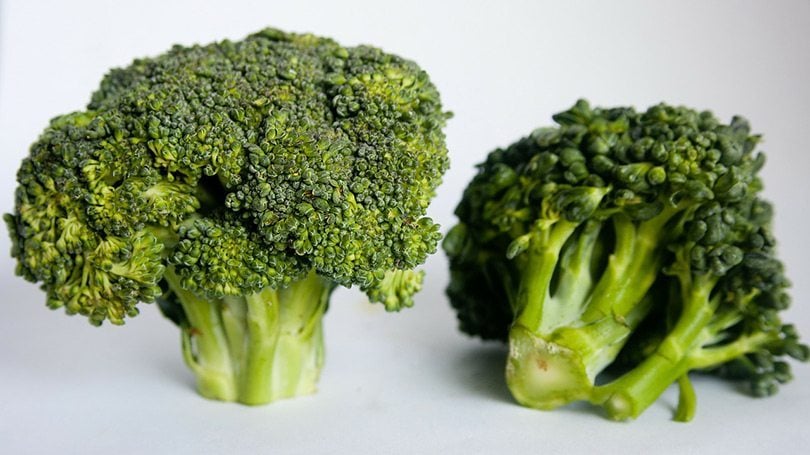
Broccoli is a great BLW food.
Broccoli is a great first food for baby-led weaning!
What Are Good First Foods For Baby-Led Weaning?

  • Banana is a great first food to introduce to baby. Ideally, you’ll cut the banana up into chunks, which are easiest for them to hold and chew on.
  • Melon is also great. Cantaloupe or watermelon is soft, watery and easy to chew, plus it’s super healthy!
  • Avocado is awesome; it’s really soft, full of healthy fats and can be served raw. Not the easiest for baby to eat, but still yummy and healthy.
  • Carrots when steamed are excellent! Easy to hold onto and soft and nutritious when they’re fully cooked.
  • Broccoli is another great one when steamed.
  • Cucubumer is a great BLW food when sliced up. Nice and soft, easy to hold onto and full of great nutrients.

Basically, any soft fruits or veggies that are easy for baby to hold onto make great choices for BLW.

Foods to Avoid

It’s usually pretty obvious which foods should be avoided.

  • Anything that’s a choking hazard like nuts or peanut butter. A full list can be found here.
  • Foods that can cause allergies. A list can be found here.
  • Anything with added salt or sugar. Salt especially can be awful for the baby’s kidneys.
  • Processed or unhealthy foods. This is self-explanatory.


How To Do BLW

Here’s how to go about baby-led weaning!

  • Choose a good time when baby is neither hungry nor full. If they’re hungry, they can be cranky, and if they’re full they’re not going to be very open to eating even more. You might as well make it as easy as possible.
  • Sit baby at the table with the rest of the family. Ideally, you’ll always do your BLW sessions when the rest of the family is eating; this makes them feel more integrated. Either put them in a high chair or have them sit in someone’s lap, but make sure they’re sitting upright and their head isn’t tilted back to avoid choking.
  • Setup a protected area to account for messes, which are definitely going to happen! I’d recommend putting something easily-washable under the chair; a painting drop cloth works well. Having them eat in just a diaper works, and you should put a good bib on them, too.
  • Offer baby food, ideally the same food everyone else is eating, especially if that’s fruits or veggies. You’ll want to give them things that are easy to handle, and also big enough that they can’t choke on it. Foods with varying textures and consistancies are great to open them up to different things. Don’t use plates or cutlery, which can only serve to confuse and makes things more complicated.
  • Let them eat at their own pace, which is key in baby-led weaning. Set the food in front of them and let them explore and taste as they prefer. Don’t be in a hurry; there’s no rush! They’ll probably want to play with and smush the food at first, so don’t expect them to eat right away. It’s all a learning process.
  • Offer water in a small cup but don’t expect them to drink it right away either. In fact, most children will probably prefer to drink milk from the breast or bottle at first.

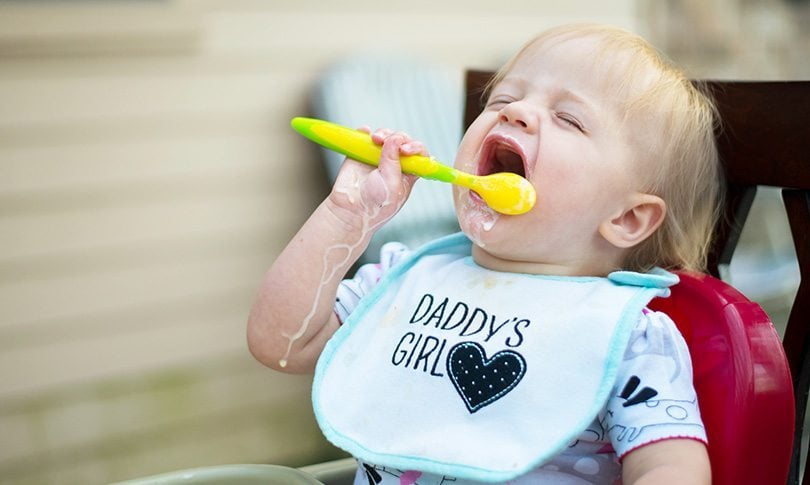
Baby-led weaning is messy... but it works!
Baby-led weaning is messy… but it works!
Tips For BLW

  • Forget “baby food”, meaning the mushy stuff that comes in jars from the grocery store. You want to go with pieces of actual food, preferably soft stuff like fruits and veggies.
  • It doesn’t have to be veggies. If the family is eating spaghetti, it’s perfectly fine to offer it (cut up into small pieces) too. One of the big benefits of BLW is getting baby involved in eating along with the rest of the family. Just make sure it’s not anything with added salt or spices that could irritate.
  • No bowls or spoons, period. Having a bowl on the high chair is just asking for it to be flung across the room! It’s best to put the food directly on the (clean) high chair tray or table. It’s going to be more messy, but BLW isn’t exactly the most neat and tidy of experiences to begin with.
  • Don’t overwhelm them with too much choice. Offer only a few pieces of food at once; too much can leave them feeling overwhelmed.
  • Don’t put food directly into baby’s mouth. The whole point is to let them take the lead, and forcing them can also lead to choking.
  • If baby gags, don’t panic. It’s simply their way of moving food around their mouth! I know it can be alarming but it’s really nothing to worry about.
  • The BLW time can be kind of frustrating to babies. They’re pretty hungry, and feeding themselves isn’t the easiest thing in the world. It’s best to time these sessions between milk feeds so baby isn’t cranky and hungry. It makes things easier.
  • Put a painting drop cloth under the high chair to catch messes, which are definitely going to happen. These cloths are cheap and made of plastic, and you can wash them off and hang them to air dry.
  • Eating outside is also a good idea if the weather is warm and nice. It’s a great way to deal with the mess.
  • Don’t get stuck on 3 meals a day. Just go with whatever schedule works best for you and baby. Sometimes they just won’t be hungry, and sometimes you won’t have time. Just go at your own pace.
  • Take pictures! This is going to be an experience to remember, and it doesn’t last very long. You’ll appreciate having pictures to remind you of the fun and messy times you had.


You Can Always Take the Half n’ Half Approach

If you’re not totally sold on strictly baby-led weaning, you’re not alone. Some experts recommend doing BLW, but also mixing it up with spoon-fed purees, which might be more realistic for some parents. This is especially important, as the study I linked to showed that about 6% of children develop more slowly than others, meaning they pick up on BLW more slowly and end up malnourished.

Some parents are under the misconception that BLW should be completely hands off, and that doesn’t mean you should set food out in front of baby and walk away. A little encouragement and help doesn’t hurt at all, and it’s not going to be any detriment to the effectiveness of BLW.

It’s also very possible that your baby won’t get all of the nutrients she needs. By 6 months, babies need a lot of iron, and they won’t get enough of it from solely breast milk; they need food sources of iron. Since it’s very hard (if not impossible) for BLW babies to chew and eat meat, this can be a problem.

This is another reason why the half n’ half approach is good. Why not give baby a piece of cooked pork chop to chew on, but pulverize some to make sure they’ll eat some?

You don’t have to follow what BLW advocates say exactly. For many people, it’s just not realistic to never intervene ever in the feeding process. Some foods, like avocado are almost impossible for baby to eat with their hands, too. If they show an interest, you could help them with it.

Baby-Led Weaning & Choking: Is It a Concern?

You’re possibly worried, and rightfully so, about choking. The fact is that it’s always a concern, and it is possible for children to choke during BLW. However, it’s actually far less likely than by spoon-feeding them or putting pieces of food in their mouth!

The key to proper BLW is to give them larger pieces of food that they have to gnaw and chew on. What’s good is that the child will be physically unable to bite off a piece of food if they are incapable of swallowing it, which is kind of like nature’s way of protecting them from choking. If you give them finger foods or pointy stuff, that’s when the real danger happens.

Now, you should know there’s a difference between choking and gagging. Gagging is actually quite common during BLW, and it’s really nothing to be concerned about. It’s most likely going to happen and it doesn’t mean they’re choking; it helps them move the food around their mouth.

A first-aid course is a good idea if you want to be prepared in the case of actual choking. You can likely find one in your area, and some places offer specialized courses meant for babies and children. It could give you some piece of mind!

What Are The Downsides of BLW?

Of course, it’s not all upsides. The biggest downside and the one most people will tell you about right away is that it’s MESSY. At first food will be in their hands, on the floor, all over their face, maybe even all over you; pretty much anywhere but their mouth. This also means that there’s a lot of waste.

The messiness also makes it difficult to know exactly how much your child actually consumed. This is only hard at first, because over time they’ll eat more and more and have less mess.

SOURCE: Momtricks
 
Copyright © 2017 iBaby Life. Designed by OddThemes